

What is a Forsyte? Lots of people may ask this question as excitement or dread builds around the PBS debut of “The Forsytes.” That excitement is because it is one of those titles that quietly shaped every period drama and miniseries that came after it.
The dread comes from fears of a reinterpretation of John Galsworthy’s Nobel Prize-winning books, collectively known as “The Forsyte Saga,” to suit an audience besotted with “Bridgerton” and other sensual period adaptations. Still, most who try to define a Forsyte do so because they aren’t familiar with these stories. At least, not in book form.
That benign ignorance will serve PBS’ highly liberal adaptation of the series very well.
“The Forsytes” is inspired by Galsworthy’s family of extremely wealthy stockbrokers in late-Victorian London, an age in which nobility’s influence and social dominance receded with the rise of new money. Nominally headed by its matriarch, Ann Forsyte (Francesca Annis), the series looks at how the overwhelming expectations of the older generation, led by Ann’s two ornery middle-aged sons, bring strife on their offspring.
Jolyon (Danny Griffin) is expected to assume leadership of the family firm, per tradition. But his uncle sees Jolyon as too soft to keep the firm competitive, believing his own son Soames (Joshua Orpin) to be a more suitably hard-nosed successor.
Sounds like “The Gilded Age,” right? That it does, which is why these books have been unearthed from the stacks yet again. “The Forsytes” is a clunky visual feast, but it’s also a new hot dish in an expanding buffet of eat-the-rich takes that materializes what one imagines a serialized adaptation of Gentlemen’s Quarterly would look like.
Galsworthy’s stories always had suds around the edges, but these new episodes are also a good deal hornier. Jolyon is played by a male model whose lustrous mane gets more of a workout than his emotional range. His character also boxes, preferring to spar shirtless.
Meanwhile, Orpin’s muscular flexing in Soames’ fitted T-shirts rivals anything Jeremy Allen White serves in “The Bear.” Even their rich daddies (played by Stephen Moyer and Jack Davenport) can still get it. Doubt me? Compare them to the grizzled, huffy statesmen who previously played those roles, especially in the 2002 ITV adaptation. Seriously, see for yourself — it’s currently streaming on Netflix. Unless you have a kink for Milburn Pennybags, aka the Monopoly man, my opinion stands.
(PBS) Joshua Orrin as Soames Forsyte and Danny Griffin as Jolyon Forsyte in “The Forsytes”
Debbie Horsfield, who made millions swoon with “Poldark” before taking on this adaptation for PBS, recognizes the place that “The Forsyte Saga” holds in TV history. Every miniseries and period piece that came after the 1967 adaptation looks and feels the way they do because of what that series achieved. It brought the bootstrapping fantasy of this rising family, a few generations removed from the toiling class, into Britain’s living rooms with the right blend of serious theatricality and soapy splendor.
But the sensibilities of corset-and-bustle dramas have vastly changed since the first “Forsyte Saga” enthralled 18 million U.K. viewers nearly 60 years ago. (Once the world got in on the phenomenon — including, in a historic first for the BBC, the Soviet Union — viewership swelled to an estimated 160 million.)
Want more from culture than just the latest trend? The Swell highlights art made to last.Sign up here
From age to age, defining what makes a Forsyte has grown trickier. Galsworthy’s heroes represent the way new money can be trapped between stifling tradition and modern realities, but our social boundaries are constantly shifting. And while previous TV adaptations root into the emotional interiority of their male characters while sidelining female desire, “The Forsytes” places more narrative purpose in the hands of its women.
That idea starts with Ann Forsyte’s table-setting narration, a la Lady Whistledown in “Bridgerton.” But it also plays out in the storyline between Jolyon, the favorite son, and Louisa Byrne (“Poldark” star Eleanor Tomlinson), a figure from his bohemian past. Once upon a time, he lived out his starving artist fantasies abroad before putting that aside to join the family business. He pretends to be content with all the trappings of wealth, but Louisa’s accidental reemergence makes him question everything – including his otherwise happy union with his carefully chosen wife (Tuppence Middleton), who understands the Forsytes’ ambition better than he does.
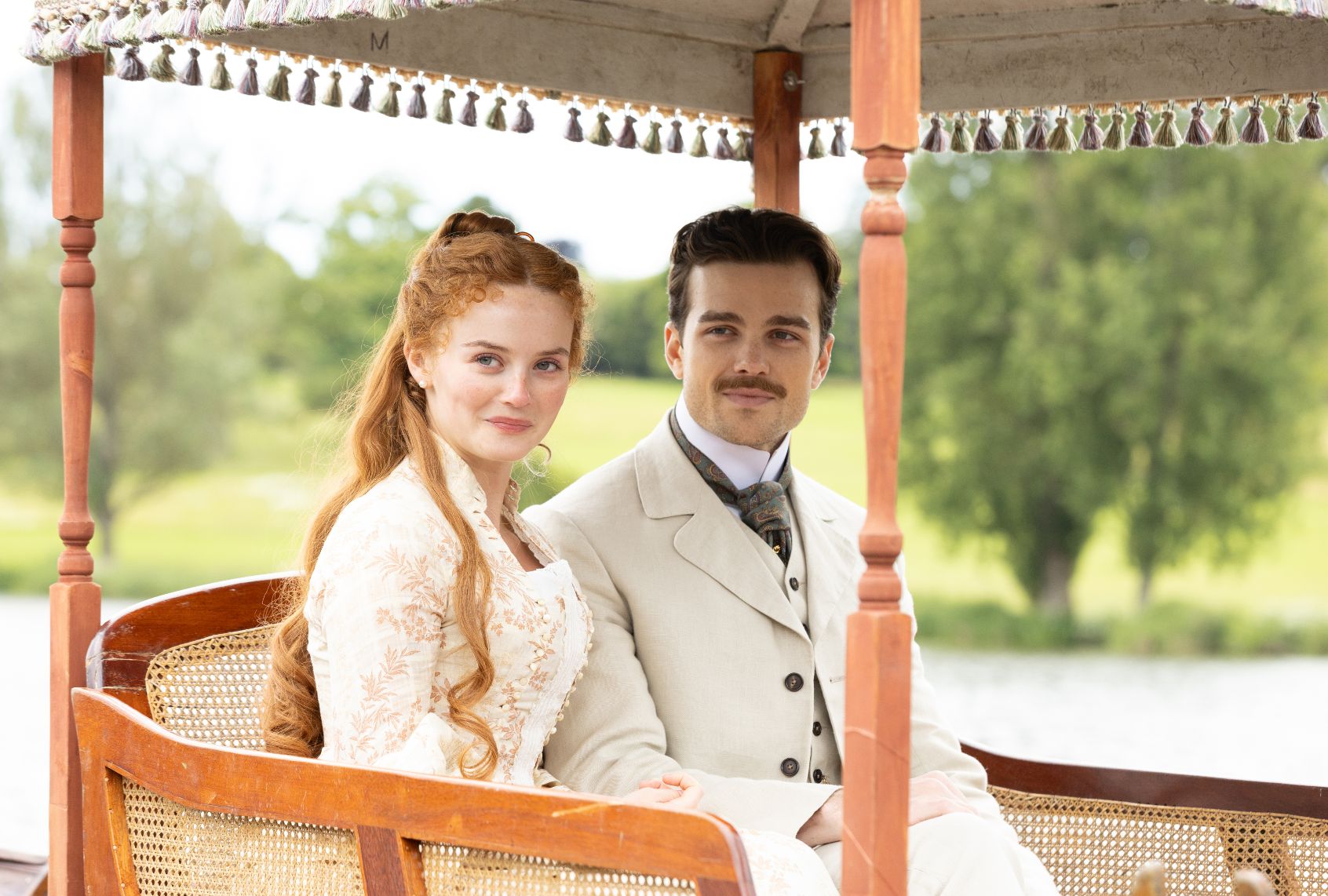
(PBS) Millie Gibson as Irene Heron and Joshua Orrin as Soames Forsyte in “The Forsytes”
While Jolyon is a central character in “The Forsytes,” Soames’ inner conflict is Galsworthy’s cynosure: He’s a man who prizes acquisition and possession to the extent that he cannot love. As he’s classically rendered, Soames verges on unpalatable.
That also makes him a challenge for any actor to take on. Errol Flynn’s rendition in 1949’s “That Forsyte Woman” is viewed as one of his best performances. Damian Lewis’ 2002 version, captured fresh off his career-making work in “Band of Brothers,” shivers with trussed-up desire gone spoiled and toxic. And yet, in the end, you can’t help but pity the man.
Orpin initially presents Soames as a dutiful son eager to live up to his father’s demanding expectations until he meets Irene Heron (Millie Gibson), a penniless beauty grieving her recently deceased father. Irene’s artistic ambition and free-spirited nature draw Soames to her. When he falls for her, he claims he’ll give up anything to be at her side.
But he is still a Forsyte, and that makes Irene just another collectible.
The everlasting draw of “The Forsyte Saga” to both men and women, then, is in the way these stories capture the plight of patriarchal pressures, spoken and implied. Ultimately, though, Galsworthy’s question is much simpler than such a heady proposition. Is life richer with a fortuneless love match, or with all the wealth in the world and a stable union devoid of romantic passion?
How we’d answer that explains why this family keeps showing up on our TVs. Horsfield’s version shows the kind of sumptuous cage many aspire to live in, revealing why some people prefer to remain lavishly trapped, and others rattle the bars, hoping for escape. Today’s red-pilled men would find much in common with Soames’ worldview, while women may recognize him as a bouquet of red flags wrapped in a bespoke suit.
You can follow your happiness or aim for stability, but rarely do we get both in life. We’d like to imagine that’s especially true for the one percent; since they own much of the world, why should they also be lucky in love?
Read more
from Salon’s culture newsletter, The Swell


