

Throughout July, The Swell is celebrating the lasting cultural inspiration of animator Hayao Miyazaki and the legendary films he created with Studio Ghibli. As part of GKIDS’ annual Studio Ghibli Fest, which kicked off in June, you can enjoy theatrical re-releases of some of his most famous works – including “My Neighbor Totoro,” which we’ll look at next week. First, we consider the influence of “Spirited Away” on an American-born animated classic.
“Avatar: The Last Airbender” wasn’t made with me in mind. The American animated series premiered in 2005 on Nickelodeon, a network entirely devoted to children’s programming. Ostensibly, there was no reason for a childless adult like me to watch it — unless said adult also happened to be a lifelong anime fan. Which I am!
Shortly after Aang, the Avatar, emerged from the ice that hid him for a century, it was plain to see that this show was its own wonderful, all-ages treat. Co-creators Michael Dante DiMartino and Bryan Konietzko weren’t trying to emulate anything on Adult Swim’s anime lineup at that time, even if their affinity for Japanese animation and manga shone through each frame of their work. What stood out most was and is their profound appreciation for a grander inspirational source: the world of Studio Ghibli, brought to life by Hayao Miyazaki.
If despair is weighing you down, Miyazaki’s films and inheritors like “Avatar: The Last Airbender” are powerful antidotes. I’ve lost count of how many times over the last two decades that I’ve dug out my “Avatar” DVDs and selected a favorite episode to give me a mood boost — or a cathartic sob, to be real about it. Miyazaki’s influence on the show is tangible in those moments, especially to anyone who grew up with his stories and associate them with safety and comfort.
DiMartino and Konietzko are great fans of Studio Ghibli’s “Princess Mononoke” and the Oscar-winning “Spirited Away,” which marks its 25th anniversary this year. Visible tributes to other Miyazaki works are apparent through “Avatar,” perhaps the most obvious being Aapa, Aang’s beloved sky bison, whose appearance is inspired by the adorable Catbus from “My Neighbor Totoro.”
(Paramount+) “Avatar Aang: The Last Airbender.”
“Spirited Away” is a story of a girl, Chihiro, who wanders with her parents into a magical realm and ends up getting stuck there when her mother and father transform into pigs. She’s pressed into the service of a controlling witch, Yubaba, who runs a bathhouse where Chihiro finds work. Once she settles in, the girl befriends other spirits and wins them over with her acceptance and understanding — including a few shunned by everyone else, like the famous No-Face. Her special power is foreign to most beings in that world: She is loving.
“I believe that stories have an important role to play in the formation of human beings,” Miyazaki once said, “that they can stimulate, amaze and inspire their listeners.”
The mythic backbone of “Avatar” is in many ways just as simple. Aang’s inherited mission, passed down to him by generations of previous divinities, is to restore and maintain the world’s elemental balance. The land he was born into was harmoniously divided between the Earth Kingdom, the Northern and Southern Water Tribes, the Air Nomads and the Fire Nation, each of which is home to a handful of people who can “bend” their native element.
But when he vanished for 100 years, the Fire Nation rose up, wiped out his people and decimated the water benders. The Earth Kingdom’s rulers responded by shutting out all outsiders. For the entirety of “Avatar,” Aang’s loved ones and allies try to persuade him that the only way to stop the Fire Nation is to kill its despotic ruler, Lord Ozai. But Aang never stops seeking alternative solutions.
While Aang’s saga follows the trajectory of Western fantasies that revolve around a Chosen One, his stubborn insistence on nonviolence and befriending perceived enemies reflects Miyazaki’s reverence for empathy, innocence and life’s natural beauty.
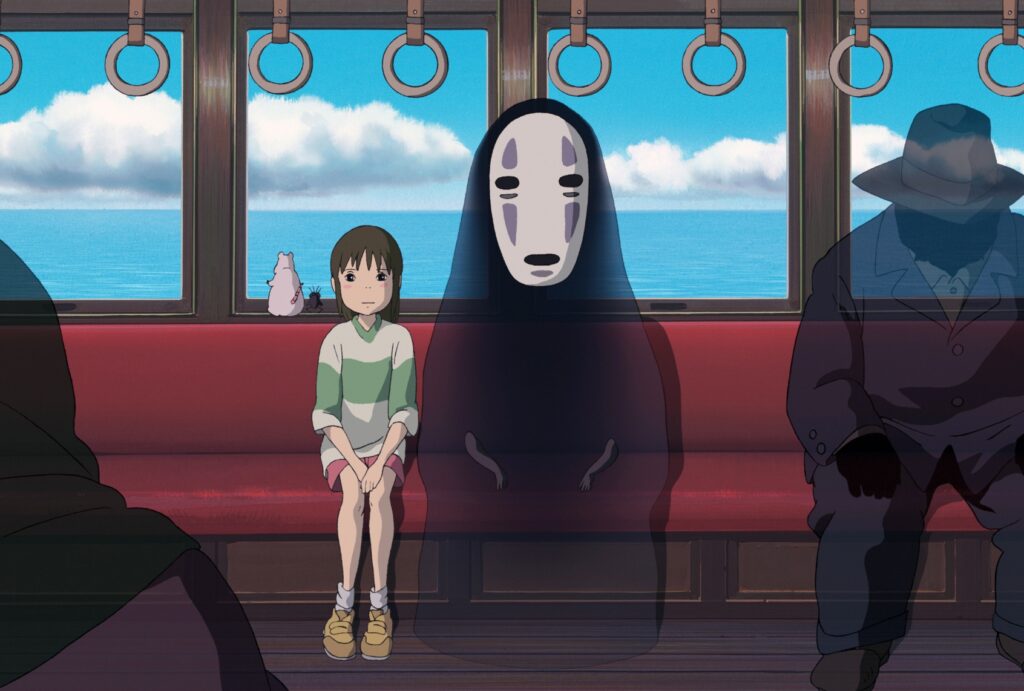 (A still from “Spirited Away.” © 2001 Hayao Miyazaki/Studio Ghibli)
To children, “Spirited Away” is about a little girl striving to find a way back home, a premise as familiar as “The Wizard of Oz.” But it’s also a story about, say, how a creature’s loneliness might make him greedy and petulant, and how sometimes the best solution is to feed someone’s heart as opposed to their impulses. Like Miyazaki’s other stories, it’s a tale designed to grow with us as we mature from childhood to adulthood.
“Avatar: The Last Airbender” has a similar build and intention, although its makers allow Aang to grapple with the stark reality of human cruelty. Throughout its run, Aang grieved his people’s genocide and fought to prevent the Northern Water Tribe from meeting the same fate.
Eventually he finds his Earth Kingdom teacher, Toph, a blind young woman who is also one of the world’s greatest benders. She follows him to break free of ableist parents who can’t conceive of their daughter’s extensive capabilities. But they also encounter an authoritarian society, Ba Sing Se, where a shadow government maintains control over its population by censoring free expression.
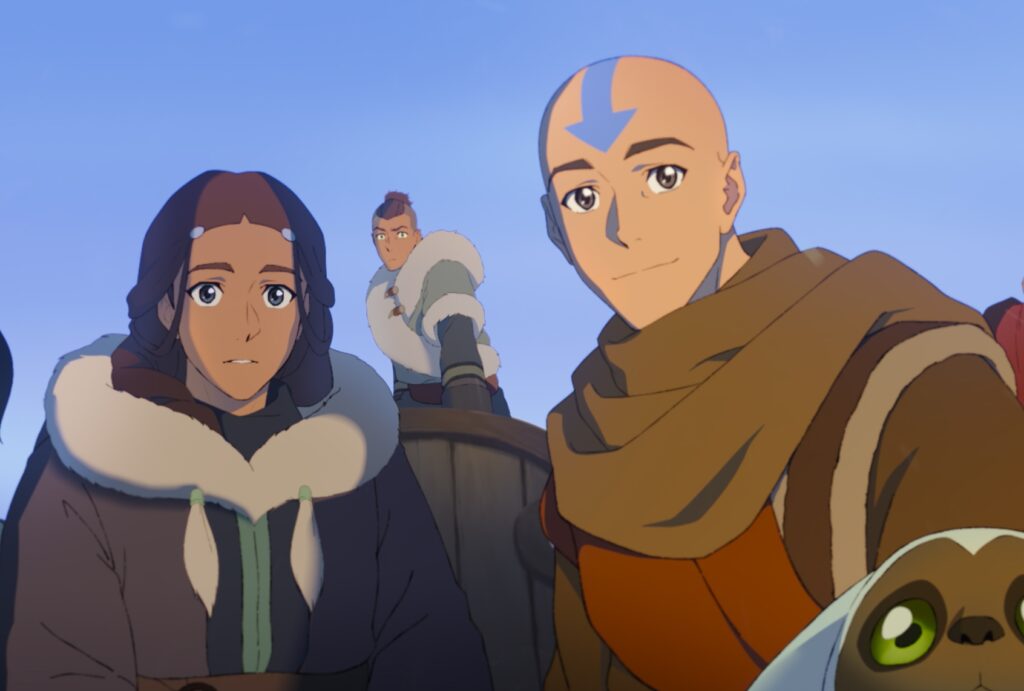
(Paramount+) Avatar Aang: The Last Airbender, streaming on Paramount+
When the animated “Avatar” quietly showed up in Netflix’s catalog in 2020, it quickly rose to the top of the streamer’s list of most popular shows. Some part of that is due to the series’ nostalgia factor, but much can be attributed to timing; fighting fascism was on a lot of people’s minds. It still is, making this month’s arrival of the long-awaited movie sequel “Avatar Aang: The Last Airbender” feel especially fortuitous.
But I’ve no doubt that, like me, many people found comfort in the story’s resolute belief in humankind’s capacity for grace even after someone has greatly wronged us.
Want more from culture than just the latest trend? The Swell highlights art made to last.Sign up here
Aang befriended Zuko, an exiled Fire Nation prince who at first hunted Aang to regain his father’s approval before joining his quarry’s mission to restore peace. Similarly, in “Spirited Away,” when Chihiro finally wins freedom for herself and her parents, she doesn’t gloat at Yubaba but affectionately calls her “granny” as she leaves.
“I believe that stories have an important role to play in the formation of human beings,” Miyazaki once said, “that they can stimulate, amaze and inspire their listeners.” Some of those listeners and viewers carry on what storytellers like Miyazaki began, doing their part to beckon us to see beyond life’s troubles for a while, to find a bit more balance. That’s necessary magic in an age that’s starving for it.
“Avatar Aang: The Last Airbender” debuts Saturday, July 25 on Paramount+. “Spirited Away” is streaming on HBO Max.
Read more
from Salon’s Culture newsletter, The Swell


