

Despite the internet’s penchant for confusing popularity with profundity, “Heated Rivalry,” Canada’s completely inescapable gay romance series about two star-crossed hockey players, only has glimpses of true complexity. The show is, by and large, about the smut of it all, and viewers can’t seem to get enough of Montreal’s star player Shane Hollander (Hudson Williams) duking it out with Russia’s bad boy Ilya Rozanov (Connor Storrie), both on the ice and in the bedroom. But while the series’ softcore pornography doesn’t negate the emotional effect Shane and Ilya’s love story has on its audience, it’s worth noting that the largest demographic of “Heated Rivalry” viewers is women, with a significant and particularly vocal portion of those women being straight. The series’ female audience is inextricably linked to its existence, providing a constant source of fascination for critics and a recurring talking point for the show’s seemingly never-ending press tour. There’s no question: Straight women — the same ones who turned Rachel Reid’s source novel into a bestseller — helped explode “Heated Rivalry” into the indomitable sensation it has become.
If actual gay men can’t interpret media depicting their own experience without being threatened to the point of public apology, the question of whether or not some “Heated Rivalry” viewers fetishize them is no longer a question, but a fact.
But anyone tracking the show’s popularity has likely seen that straight women have been both its champions and its warriors. Over the holiday season, there were online pile-ons galore, with straight women repeatedly taking gay critics of the show to task over their negative or merely interrogative opinions of the series. One noteworthy snafu involved writer and actor Jordan Firstman, who criticized “Heated Rivalry” for what he believed was an unrealistic portrayal of gay sex. “It’s just not gay,” Firstman told Vulture last month. “It’s not how gay people f**k.” In response, the show’s army of fans flooded Firstman’s Instagram with hateful comments, swore to boycott “I Love LA, ” the HBO show Firstman is currently starring in, and turned a genuinely innocuous comment into a war that had every “Heated Rivalry” viewer, gay or straight, picking a side. Even one of the show’s supporting actors, François Arnaud, chimed in with a retort to the tune of 30,000-plus likes and counting. In no time at all, the backlash became so intense that Firstman walked back his comments, and the show’s creator and writer, Jacob Tierney — who is gay — said Firstman sent him and the cast apology messages. “We as queer people need to check our messaging,” Tierney told The Hollywood Reporter following the incident, brushing off criticisms that the show is fetishizing the gay experience for women viewers.
(Sabrina Lantos/HBO Max) Connor Storrie in “Heated Rivalry”
The thing is: Tierney is smart. He knows “Heated Rivalry” inside and out. Tierney understands the book’s intense enthusiasts and the modern men-loving-men genre, which evolved from the Boys Love fandom that originated in 1970s Japanese culture and has persisted in contemporary media with fanfiction and romance writing. He also clearly knows that anything other than unmitigated gratitude for the women who have made this show such a massive success could come at an equally immense cost, as demonstrated by the fast and ferocious response to Firstman’s comments. But if actual gay men can’t interpret media depicting their own experience without being threatened to the point of public apology, the question of whether or not some “Heated Rivalry” viewers fetishize them is no longer a question, but a fact. What’s more, the active policing of minorities from outside parties diminishes the impact “Heated Rivalry” stands to have on its gay audience, especially younger viewers. And when everybody — gay men or straight women — is discouraged from thinking more critically about the media they consume, nobody wins in this giant gay hockey game.
Though fetishization can be a tricky (and fascinating) subject to parse, it’s not inherently bad. Like all things in life, fetishes are multifaceted and complex; they don’t necessarily always relate to exoticizing someone for their identity. Often, fetishes are harmless, little physical traits or romantic qualities that one can admire without emotional injury. As Reid puts it to The Hollywood Reporter: “A lot of my female readers prefer not to have a woman in the book because of their own, usually dark pasts with sex with men. They prefer to get lost in a fantasy where there’s nobody there that they can relate to directly. They don’t want to insert themselves into these sex scenes. It just feels safer.” Sex researcher Lucy Neville adds that many women, particularly those who have survived sexual violence, enjoy male-male porn because it’s a safe way to derive pleasure from men without engaging with the thornier parts of their sexuality.
Undoubtedly, a large number of women — and I prefer to say “women” over “female” to account for the show’s trans audience, which is very active online — who watch “Heated Rivalry” fall into this category. The series is a steamy yet safe way to interact with men and masculinity. Sex and hockey are sweaty and physically demanding, and they make the perfect identical match to contend with machismo while avoiding its (often) toxic qualities. And though the romance and sex between Ilya and Shane is hot and heavy, it can also be quite tender and intimate. “Heated Rivalry” has everything that a person attracted to men could want, without any of the negative collateral damage. Enjoying that aspect is not fetishization.
Want more from culture than just the latest trend? The Swell highlights art made to last.Sign up here
It’s when enjoyment turns to blind passion that the problems begin. “Fandom” is essentially synonymous with “unreasonable” at this point, and the “Heated Rivalry” fandom can be quite unreasonable, to put it mildly. Bullying an actual gay man like Firstman into apologizing for inoffensive comments about the show’s depiction of sex is, frankly, outrageous. (And, for what it’s worth, he’s not wrong. In one early scene, Shane — who has never bottomed before — isn’t just penetrated for the first time with surprising ease; he’s drilled without lube. I’ll speak from experience here when I say that you wouldn’t hear moaning, but a big old cartoonish “YEEEOWCH!” if that were the case.)
There’s also the matter of Vulture writer Jason P. Frank, who not only conducted the original interview with Firstman but also talked to Arnaud about the show, asking him directly about Firstman’s comments and Arnaud’s Instagram response to them. Arnaud engaged thoughtfully with Frank, and like any decent journalist, Frank pushed Arnaud for honest answers.
The “Heated Rivalry” fandom didn’t like that one bit. In the comments on Vulture’s website, readers called Frank a “bitc*y New York queen” and “confrontational.” Others called for Frank to apologize and for a “do-over” interview with the same publication. (Reader, that’s not how journalism works.) On social media, some praised Frank’s piece and his willingness to press Arnaud to get his true feelings throughout the conversation; most said he was rude and antagonistic.
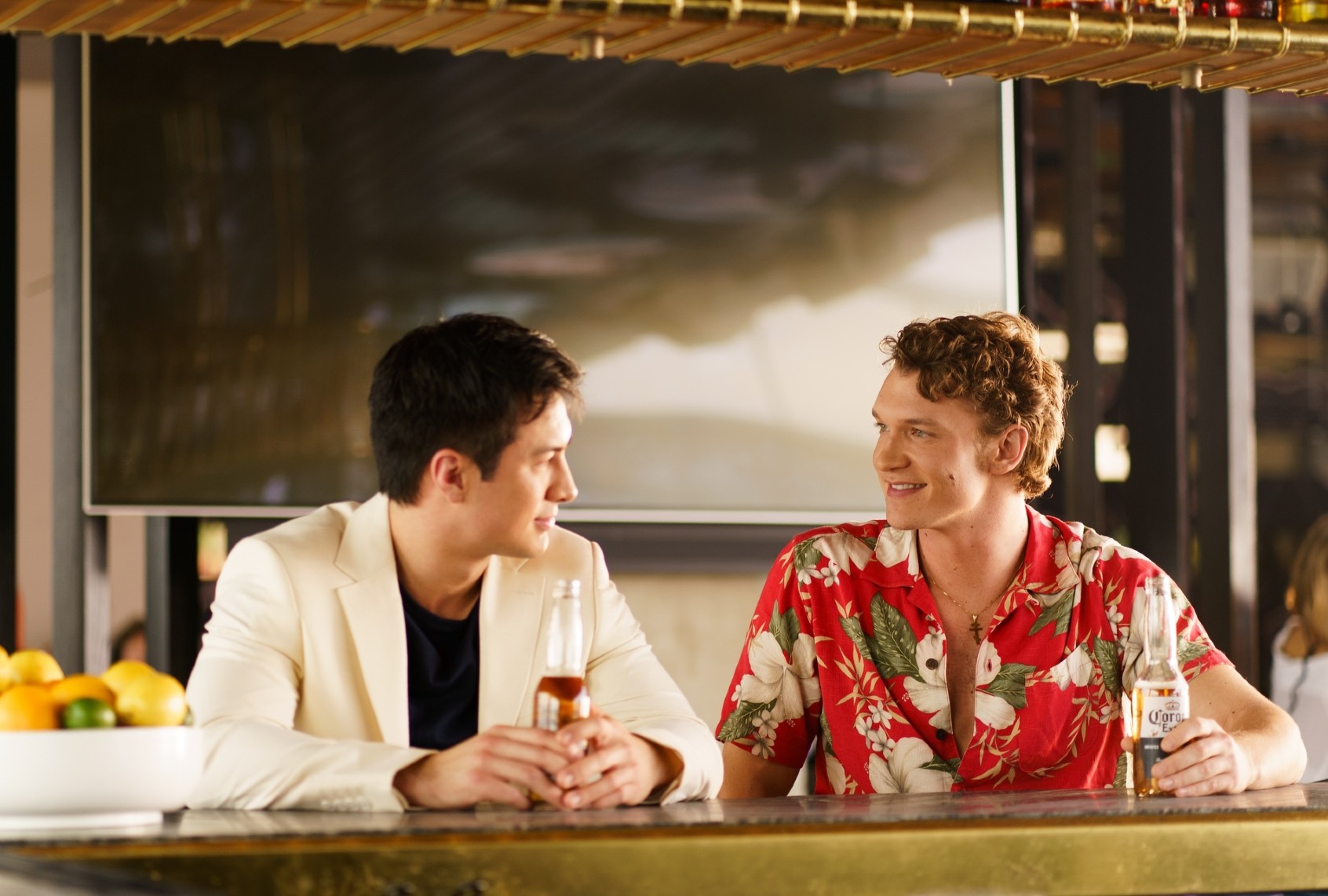
(Sabrina Lantos/HBO Max) Hudson Williams and Connor Storrie in “Heated Rivalry”
There is no one true way to be gay. And that’s what the women fetishizing the gay men of “Heated Rivalry” don’t like, can’t stand and openly react to: the messy imperfection of a gay man who doesn’t play by their imaginary rules.
In the seven weeks that “Heated Rivalry” has been out in the world, one can track a vast and frightening unwillingness to engage with the media on a contemplative and critical level, and it’s bleeding into how the audience reads journalism about the show, too. If journalists and even everyday gay men on social media can’t comment freely about a smutty Canadian television show without being personally vilified, it’s only going to lead to a broader culture that is more obtuse. And if things continue to trend this way, audiences will soon be willing to accept worse media, worse journalism and fluffy, PR-perfect interviews that don’t ultimately give anyone a deeper sense of the world around them.
This extreme response is where the fetishization of gay men and gay characters comes into play. If the women watching “Heated Rivalry” are asking for a “do-over” interview — and I’d say it’s safe to assume that “lacey_1230mjf06nu8” on Vulture’s website is a woman — they’re insisting that gay men continue to be the perfect, harmless dolls that act, speak and perform the way that they want us to. We must behave in a manner that is pleasurable and inoffensive to them, in a mode that aligns with the characters on their favorite television show. We begin and end in their minds as these characters, who are written to be idyllic depictions of gay men that will be agreeable to a woman’s fantasy. Make no mistake, “Heated Rivalry” is written for women. It is a show that is made for women. A woman wrote the book. And while Tierney has cleverly adapted Reid’s novel to reflect the wider gay experience more accurately, it does not depict gayness with complete authenticity simply because there is no one true way to be gay. And that’s what the women fetishizing the gay men of “Heated Rivalry” don’t like, can’t stand and openly react to: the messy imperfection of a gay man who doesn’t play by their imaginary rules.
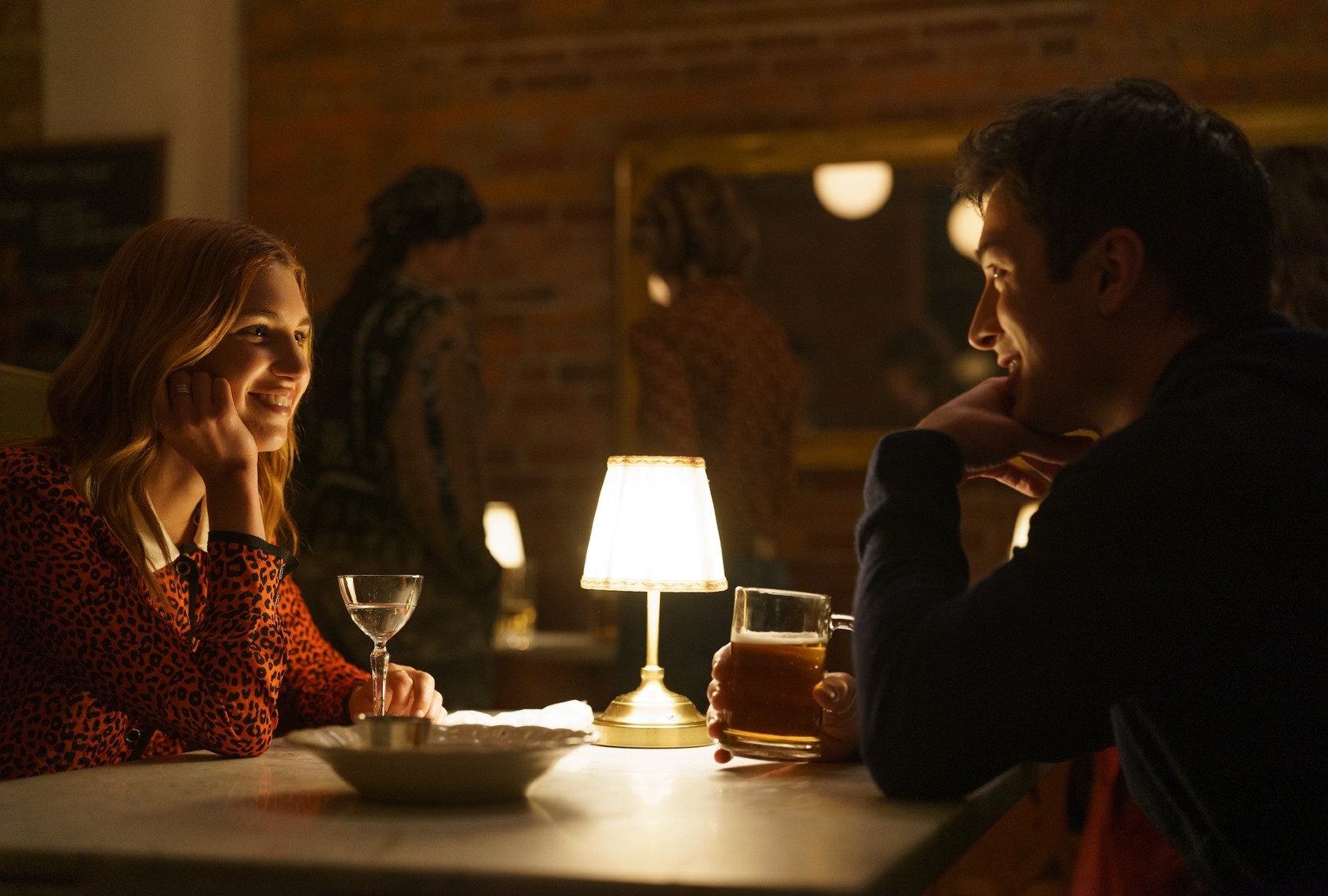
(Sabrina Lantos/HBO Max) Sophie Nélisse and Hudson Williams in “Heated Rivalry”
Even more prickly is when fetishization crosses the line into unintentional homophobia. Sometimes, women express their affection for gay men so intensely that they end up reducing us to objects or falling into old, toxic tropes and prejudices. Commenting on a video of Storrie lip syncing to Madonna’s “Like A Prayer,” one X user named Mya, who lists her pronouns as she/her in her profile, said about Storrie’s speculated romantic relationship, “He (allegedly) is letting his youth and beauty be taken away from him by a 40-year-old creep.”
A 15-year age gap between two consenting adults with fully-formed brains is not uncommon or problematic, but referring to a gay man as a “creep” and implying that he’s a predator certainly is. This line of thinking aligns perfectly with the homophobic narrative among conservatives that all gay men are corrupt pedophiles. The fetishized infatuation with “Heated Rivalry” doesn’t just stop at the characters; it’s now extending to the actors as well. And in the same way that some gay men intrinsically believe that they can’t be misogynists because they’re gay, many straight women don’t realize that they can be homophobic even if they claim to love gay men. This axis tilts both ways, and neither party is exempt from examining their own relationship to gender, sexuality and fetishization.
Still, Tierney’s show has managed to thread a very complicated needle. His adaptation appeals to women and gay men alike. After some warranted skepticism watching the fandom these past few weeks, I decided to dive into the show and fell head over heels for its sweet story of forbidden romance, specifically one scene in Episode 4 that illuminates just how cunning Tierney’s writing and direction are.
As Shane and Ilya watch each other dance from across the room at a club, silently lusting and finally admitting that their mutual affection is more than just physical, Tierney cuts between the two men, going home with women, set to t.A.T.u.’s “All the Things She Said.” Ironically, this song was infamously performed by two Russian women who faked a lesbian romance in the early 2000s, one of whom later revealed herself as a virulent homophobe. In the middle of the scene, Tierney fades into a recent cover of the song by the British producer Harrison, and a man’s vocals replace the women’s.
Here, Tierney brilliantly pivots the conversation. He (perhaps unintentionally) acknowledges t.A.T.u.’s fetishization of gayness and refutes it, ultimately centering a man’s voice in this story of two men. It’s a stunning moment, and one of the show’s most memorable scenes, because it earnestly captures the silent yearning that comprises so much of the gay experience, especially for closeted gay men. Even if a straight woman viewer could understand that, she couldn’t feel it in the same way that a gay viewer could. As much as straight women might fetishize the men in “Heated Rivalry” — and as silent as Tierney might have to be about that subject publicly, at least for now — the show still puts its male gays before its female gaze. Among all of the endless chatter and misplaced obsession, that counts for a lot.
Read more
insights into the best new TV


