


When Conan O’Brien made his debut as Academy Awards host last year, the comedian was tasked with the unenviable duty of grabbing hold of a world plunging rapidly into darkness and despair and lifting it back into the light, if only for one night. In March 2025, Donald Trump had returned to power, Los Angeles was just beginning to recover from devastating wildfires and Oscar discourse had reached new, angry heights. A year and some change later, the magnitude of those events seems infinitesimal compared to each day’s headline news — nothing eclipses domestic climate disasters like international climate catastrophes imposed by an oligarch sanctioning a war in Iran for fun.
But the need for levity remains. Hope is a vital yet scarce resource, and a show designed to celebrate art and the artists who make it, being broadcast to hundreds of millions of people around the world, has the potential to instill hope on a mass scale. Throw in the fact that Ryan Coogler’s historical horror smash “Sinners” was up for a record 16 awards, and genuine, defiant progress in the face of constant inhuman brutality seemed like a real possibility. Unlike last year’s show, the 98th Academy Awards didn’t buck expectations with a moving musical performance to kick off the telecast, preempting the usual opening sketch and host’s monologue. (It seems that everyone, including the Academy of Motion Picture Arts and Sciences, has stopped pretending that “Wicked” was ever worthy of anything more than an Oscar for costume design.) Instead, O’Brien kept things light, beginning the show with an extended — if only occasionally funny — parody of the final scene of “Weapons,” dragged up as Amy Madigan’s ultra-witchy Aunt Gladys, running through scenes from each of this year’s best picture nominees.
(Kevin Winter/Getty Images) Amy Madigan accepts the Actress in a Supporting Role award for “Weapons” onstage during the 98th Oscars
In a quickly changing cinematic and cultural landscape, the Oscars have the power to define what is next. Yet, as the 98th Academy Award demonstrated, the show isn’t equipped to do much more than talk up its own impact and hope to come out unscathed on the right side of history.
The Oscars opening in a more serious manner when the film industry was directly affected by the Los Angeles wildfires, but not in a year where the world is affected by unending political horrors, is exactly the kind of move that makes many civilians think that the show is out of touch. But at the tail end of his monologue, O’Brien assured viewers that the Oscars exist to honor cinema as an art form, not for the Hollywood industrial complex patting itself on the back.
“Tonight is an international event,” O’Brien began. “If I can be serious for just a moment, everyone watching right now, around the world, is all too aware that these are very chaotic, frightening times. It’s at moments like these that I believe the Oscars are particularly resonant. Check it out: 31 countries across six continents are represented this evening. And every film we salute is the product of thousands of people, speaking different languages, working hard to make something of beauty. We pay tribute tonight not just to film, but to the ideals of global artistry, collaboration, patience, resilience, and that rarest of qualities today: optimism. Let us celebrate not because we think all is well, but because we work and hope for better in the days ahead.”
While that’s a beautiful and very true sentiment, it’s one thing to say that the Oscars want to celebrate global identities and ideals, but another thing to actually do it. Many of this year’s recipients of cinema’s most coveted award were thrillingly diverse. Other winners, including the trophy for best picture, were far more disappointing — predictable to the point of being algorithmic. The show inspired optimism, yes, but it certainly didn’t turn the dial so decisively toward radical hope that the knob broke off. Even the stray shots at Netflix CEO Ted Sarandos in O’Brien’s monologue and short sketches about distracted viewers who don’t want to pay proper attention had the chummy air of being all in good fun. How can an institution as revered and influential as the Oscars inspire optimism if the ceremony itself is unwilling to move the needle, leaving it up to winners to do that in their speeches, and then forcibly abbreviating those speeches by cutting the mic? In a quickly changing cinematic and cultural landscape, the Oscars have the power to define what is next. Yet, as the 98th Academy Award demonstrated, the show isn’t equipped to do much more than talk up its own impact and hope to come out unscathed on the right side of history.

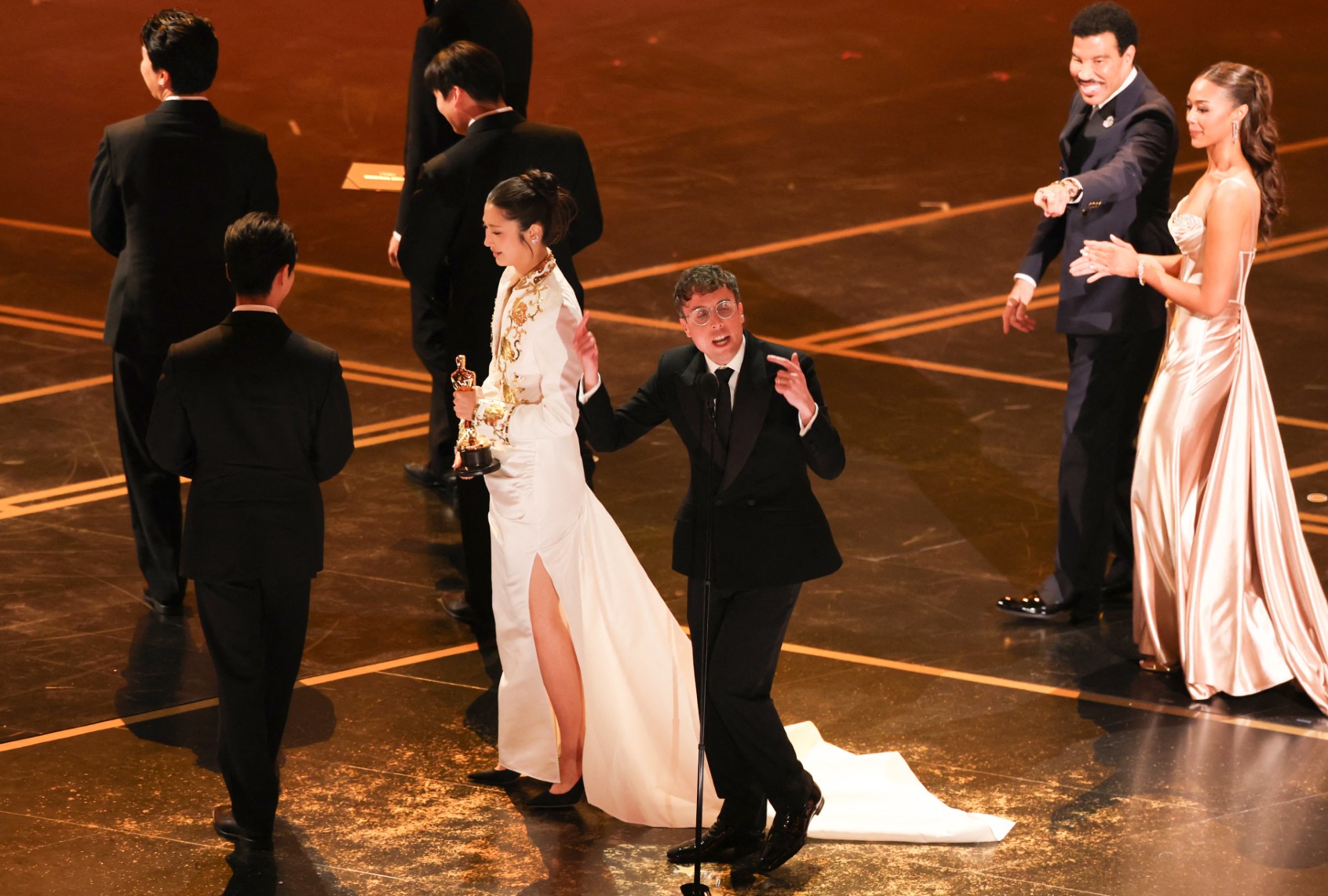
(Patrick T. Fallon / AFP via Getty Images) Ejae and Mark Sonnenblick accept the award for Best Music (Original Song) for “Golden” from “KPop Demon Hunters” uring the 98th Annual Academy Awards
The ceremony did, however, start out promising. The patience and resilience O’Brien mentioned in his monologue were immediately reflected in the first award of the night, when Madigan took home the trophy for her work in “Weapons.” A career character actor, Madigan has only been nominated for an Oscar once before, in the same category for 1985’s “Twice in a Lifetime.” Given that “Weapons” is a horror film, and the Academy rarely honors the genre’s more straightforward entries, Madigan is far from the conventional Oscar winner. She’s not the conventional speech-giver, either. “We were kind of advised, ‘Don’t say all these names because nobody knows who the hell these people are,’” Madigan said, taking a slight dig at the show. “But you’re not rattling them off. They’re people that mean something to you; that you couldn’t be here without them.”
For as many years as the Oscars have been televised, and as many winners have been dismayed at being played off by the orchestra to keep the show moving, producers still can’t seem to understand that Madigan’s perspective is exactly why people love the Oscars. In 10 years, no one is going to remember Conan O’Brien and Sterling K. Brown’s bit about movie studios asking screenwriters to repeat expository dialogue for viewers who are scrolling on their phones at the same time. People might, however, remember a moving or historic Oscar speech — a statement from a winner that inspires the exact kind of idealism the show is apparently so intent on bringing to its viewers.
Want more from culture than just the latest trend? The Swell highlights art made to last.Sign up here
The “Wrap It Up” screen flashed during cuts to the audience almost as soon as winners began speaking, and some never got the chance to talk all. The winners in the live-action short film category had the microphone turned back on after initially being played off the stage. When the team behind “Golden” — the massive hit song from best animated feature winner “KPop Demon Hunters” — won best original song, only the song’s singer and co-writer EJAE had the chance to speak. In her portion, EJAE spoke of how noteworthy it was for a K-pop song to win in the category, specifically mentioning the resilience it took to pursue a career in the genre after years of bullying. (You know, the same resilience O’Brien mentioned in his monologue!) A moment later, when co-writer Yu Han Lee approached the mic, the audio feed was cut, the orchestra played and the stage lights went down, all while EJAE looked into the camera, visibly emotional, begging for a few more moments of the world’s time. It was one of the cruelest play-offs I’ve ever seen in my decades of Oscar viewing, and an even bigger offense considering the ceremony’s insistence on positioning itself as a celebration of international film.
“Sinners” was good enough to score a record number of nominations, but apparently, not good enough to clean house. And though “One Battle After Another” still sports plenty of merit, it’s a choice that feels much more in line with the Oscars’ history than its future.
Winning an Oscar is one of the biggest moments of any recipient’s life, and the fact that the show’s writers and producers knowingly pad the telecast with bits and sketches that fill time that could be given to winners is maddening. That said, it was heartening to witness the first-ever Oscar for best casting, which went to “One Battle After Another” casting director Cassandra Kulukundis. Casting is such an integral part of the filmmaking process — as critical as other below-the-line categories like costuming and sound — that it’s shocking it took this long for casting directors’ work to be celebrated at this level. Seeing Kulukundis, who is responsible for casting one of last year’s best new finds, Chase Infiniti, collect her well-deserved award was the kind of joy that the Oscars should be trying to inspire every year, instead of dwelling on trite comic bits that only hit their mark half the time.
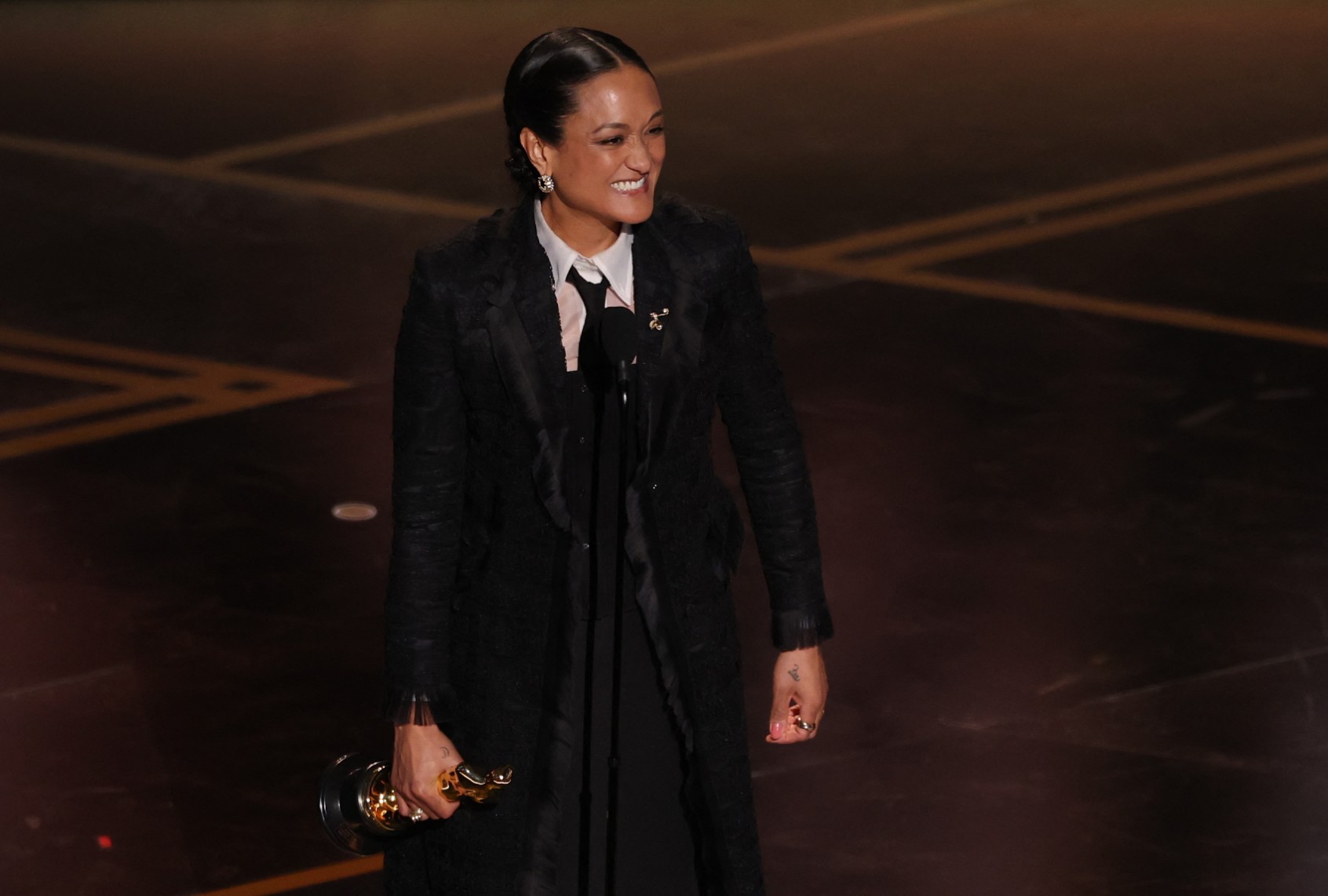
(Patrick T. Fallon / AFP via Getty Images) Autumn Durald Arkapaw accepts the award for Best Cinematography for “Sinners” onstage during the 98th Annual Academy Awards
Veneration for the craft and craftspeople was in clear view, with global fashion icon Anna Wintour popping up to honor achievements in costuming and hairstyling and makeup, while Will Arnett confidently rallied against AI before presenting the award for best animated feature. Elsewhere, Autumn Durald Arkapaw took home the award for best cinematography for her stunning work in “Sinners,” becoming the first woman to ever win in the category, and instilling hope that the film might pull out some last-minute victories after a slow start.
That wasn’t exactly in the cards. This season’s tightest race has been for the best actor trophy, with pundit predictions jumping between Stellan Skarsgård, Timothée Chalamet and Michael B. Jordan as each one picked up the award at other ceremonies earlier this year. Jordan won the Oscar, a triumphant culmination in his years-long creative partnership with “Sinners” director Ryan Coogler, who collaborated with the actor in “Black Panther,” “Creed” and “Fruitvale Station.” For a moment, it looked as though the underdog might actually come out on top. Maybe “Sinners” could pull off the unexpected and become the first horror film since “The Silence of the Lambs” to win best picture — a celebration of Blackness, culture and community finding success in both the mainstream and the establishment.
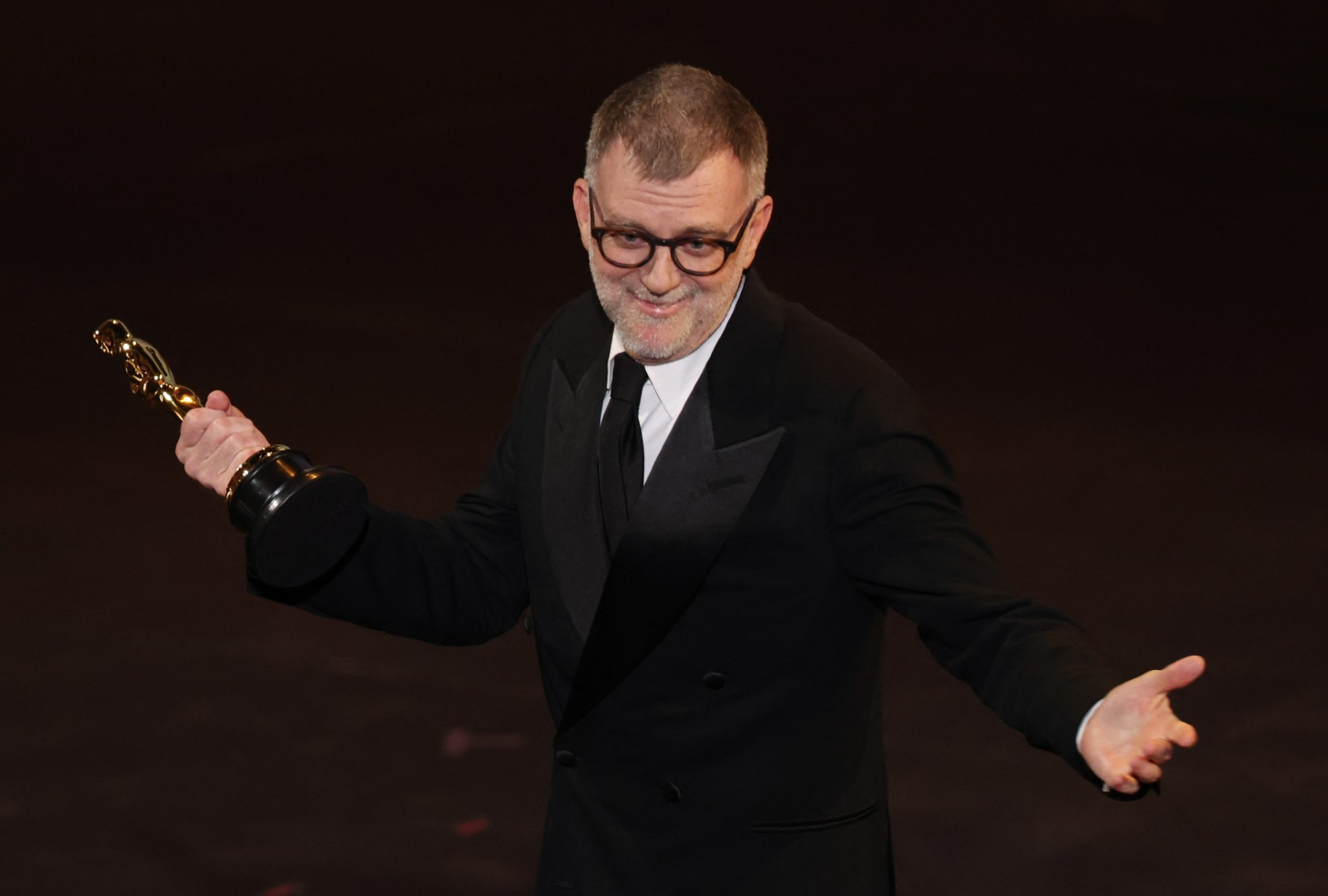
(Patrick T. Fallon / AFP via Getty Images) Paul Thomas Anderson accepts the Oscar for Best Writing (Adapted Screenplay) for “One Battle After Another” during the 98th Annual Academy Awards
The biggest award of the night went not so unexpectedly in the other direction, landing in the hands of Paul Thomas Anderson and the team behind “One Battle After Another.” Anderson’s film may be about revolutionaries, but its win isn’t entirely radical. Academy members favor films that are just rebellious enough to appease critics of the larger winners’ pool’s vast whiteness. “Sinners” was good enough to score a record number of nominations, but not good enough to clean house — a dissonance that points to the Academy’s tendency to nominate films that speak to the diverse human experience, without actually awarding them. And though “One Battle After Another” still sports plenty of merit, it’s a choice that feels much more in line with the Oscars’ history than its future.
I’d be more inclined to point toward visible change on the horizon if Academy voters refused to play it so safe. Even the surprising, gratifying wins like Madigan’s and Jordan’s feel as though they’re a mere half-step in the ceremony’s larger context. O’Brien is right, we desperately need hope, something to hold onto when the world and the film industry are at their most bleak and blighted. But considering the awards themselves held only a few surprises, and most of the goodwill was left to be generated by the presenters and winners — provided they even got a chance to speak — the Oscars still feels like it’s figuring out what the future looks like, instead of shaping that future itself. You can’t have your cake and eat it too. You can’t make fun of the people devaluing art by scrolling on their phone, watching movies at home, and then play artists off the stage before they can even say a word. And you certainly can’t quake at the industry’s bleak state while refusing to be the change you wish to see. That’s just not how the world works. But, then again, the world looks different every day.
Read more
about awards season news