

Cinematic exposition is a tricky thing. When we watch movies, we’re being plunked into a story already in progress. And unless you’re watching some outré arthouse film allowed to play by its own rules, there’s a finite amount of time for the director to communicate the essential building blocks of their story that are necessary for the viewer’s enjoyment. Done right, narrative exposition will tell an audience everything that they need to know about a character, while leaving just enough room for curiosity to take hold. Done wrong — or rather, clunkily — and the viewer can be removed from the story in a second flat, all too aware that they’re being spoon-fed a collection of character traits meant to tell, not show.
“Pretty in Pink,” released in theaters 40 years ago this week, exemplifies an ideal marriage of the two. Its opening sequence is both graceful and conspicuous; its exposition is entirely legible, yet so very charming that its plainness doesn’t matter one bit. John Hughes — who wrote the film’s screenplay but deferred direction to his collaborator, Howard Deutch — had a way of making even the obvious seem natural. As a writer, Hughes was gifted with a heavy hand and a soft touch. His early characters were consistently archetypal, plucked from the average high school experience. Scripts were packed with bad-boy rebels, spoiled teen queens and uncool misfits of all kinds. Hughes also keenly understood that, because these personalities were so familiar, his characters wouldn’t stand out to viewers unless they pushed their paradigm. These had to feel like real people with stereotypical flair, teenagers who were boxed into a category simply because that’s what high school social politics demand. And in just three minutes of exposition, Hughes and Deutch nimbly convey that Molly Ringwald’s Andie Walsh is both your conventional artsy wallflower and a singularly special young woman.
Andie and Iona are an unyielding, uniquely punk duo. They’re an unstoppable force up against an immovable object, a confident, funky bowler hat matched with a black latex dress. They won’t change for anyone . . . until, suddenly, they do.
As the camera follows a suburban Chicago street sweeper along its early morning route, it stops at a modest house, perched on the other side of the train tracks. The clear shot of the tracks seems a bit transparent, sure, but it’s an effective way for Hughes to immediately let us know that Andie and her unemployed father, Jack (Harry Dean Stanton), are working class. Andie’s socioeconomic status is integral to her character. It’s part of what makes her desperate struggle for some adolescent normalcy so resonant. Yet, before she passes her high school threshold and dives into the brutal deep end of upper secondary education, it’s all cool. Andie spends her morning enjoying the ritual of building her outfit. She leisurely puts on her stockings. She pores over a drawer of unorganized jewelry to find the right piece. She grabs a perfectly pink jacket facing the opposite direction from the rest of the things in her closet. Andie’s disorganized but inventive, and that’s exactly the way she likes it.
The first time we meet Andie’s boss and would-be mentor, Iona (Annie Potts), it’s immediately clear why the two get along so fabulously. Iona is perched on a table by a windowsill, stapling albums to the ceiling as decor to liven up the record store she runs — not that the place needs much livening-up, considering Iona’s look. She’s gelled some of her hair into spikes while the rest hangs in a ponytail behind her head, as if she misremembered “business in the front, party in the back” while getting ready in the morning. Together, Andie and Iona are an unyielding, uniquely punk duo. They’re an unstoppable force up against an immovable object, a confident, funky bowler hat matched with a black latex dress. They won’t change for anyone…until, suddenly, they do. For all of the film’s expository merit, for all of the care and efficiency Hughes exhibited in creating such wonderful and instantly lovable women, “Pretty in Pink” flubs the landing. And all for a couple of ho-hum, wearisome men.
Like so much media geared toward young people in the late 20th century, “Pretty in Pink” revolves around an event in every American teenager’s life so pivotal, so life-altering and so very defining that it could make or break the entire high school experience: prom. Or, at least that’s the way the prom seems when you’re 17 — a perception that’s coincidentally fueled by the very same media. Andie wants to go to prom, but she’s not sweating it. In all likelihood, she’ll spend the weeks leading up to prom rebuffing invitations from her persistent best friend, Duckie (Jon Cryer), until reluctantly accepting just to save face.
But Andie’s hopes shift when one of the uber-popular rich kids at her school, Blane (Andrew McCarthy), strolls into the record shop one afternoon, looking for a music recommendation. Andie tosses a few flirtatious barbs across the checkout counter, inquiring if Blane will be paying with cash or an American Express Platinum card. To her surprise, Blane can take her well-meaning jabs just fine, a far cry from the stuck-up girls in her English class and Blane’s pretentious friend, Steff (James Spader), whose fragile egos bruise at a mere withering glance. This is it! This could be Andie’s man, her future, her prom date! Endless possibilities flash before her eyes. And in the same instant, Andie’s dreams of a romance with her star-crossed lover begin to cloud her better judgment.
(Bonnie Schiffman/Getty Images) Molly Ringwald, Jon Cryer and Andrew McCarthy
What’s special about “Pretty in Pink” is ironically what makes Andie and Iona’s character arcs so frustrating. These are two women who know who they are from the jump, and the audience never spends a single moment trying to discern that, either. Iona and Andie have total agency. They’re scrappy and ambitious. Creation comes naturally to both of them; playing with personal aesthetics is a means of liberating oneself from the status quo. When Andie goes to school in outfits that she made herself, and Iona greets shoplifters with a severe asymmetrical wig and a loaded staple gun aimed at the face, these decisions are not indicators of class or etiquette — they’re bold personal choices. Andie and Iona would rather go their own way than try to keep up with anyone else, and they’re not ashamed of that, no matter how many people tell them that they should be. When Andie defends herself from the girls bullying her in her gym class and gets sent to the principal’s office for it, she refuses to offer a polite apology. “I’m getting a better education than I deserve, and I’m fortunate that the good people of this community allow me to attend this school,” Andie says sarcastically. “I understand everything, Mr. Donnelly, and I don’t need to have it explained to me. I live it.”
Want more from culture than just the latest trend? The Swell highlights art made to last.Sign up here
Hughes’ script supplies Andie with a fount of vivacious wit and self-assurance, which is what makes watching her dull her shine as the film progresses so confounding. After a bit more flirting, Blane looks for Andie to ask her out on a real date and finds her taking her lunch period in the school’s courtyard, where all of the oddball students hang out. Seated next to her, Blane quietly admits, “I’m not really into all this sh*t, you know?” For the first time in his high school career, he’s as uncomfortable as the popular crowd has made it for Andie every day of the last four years. Yet, Andie holds her head high in the hallway while Blane’s is bowed in the courtyard, dodging stares. If this is a move to level the playing field and show Andie that his interest in her reaches beyond their material differences, the least Blane could do is not disparage where she spends her time and how she chooses to spend it.
As clearly as Andie might be able to see herself, it’s far more difficult for her to see the flaws in her burgeoning romance with Blane until they become glaringly apparent. Really, that’s just being a teenager. When we’re young and dreaming of having the kind of love we’ve only read about in books and seen in movies, it’s easy to be swept away by the first decent person who offers you attention. Figuring out who and how you love takes trial and error, two things Andie and Blane both endure while trying to fit into each other’s respective worlds.
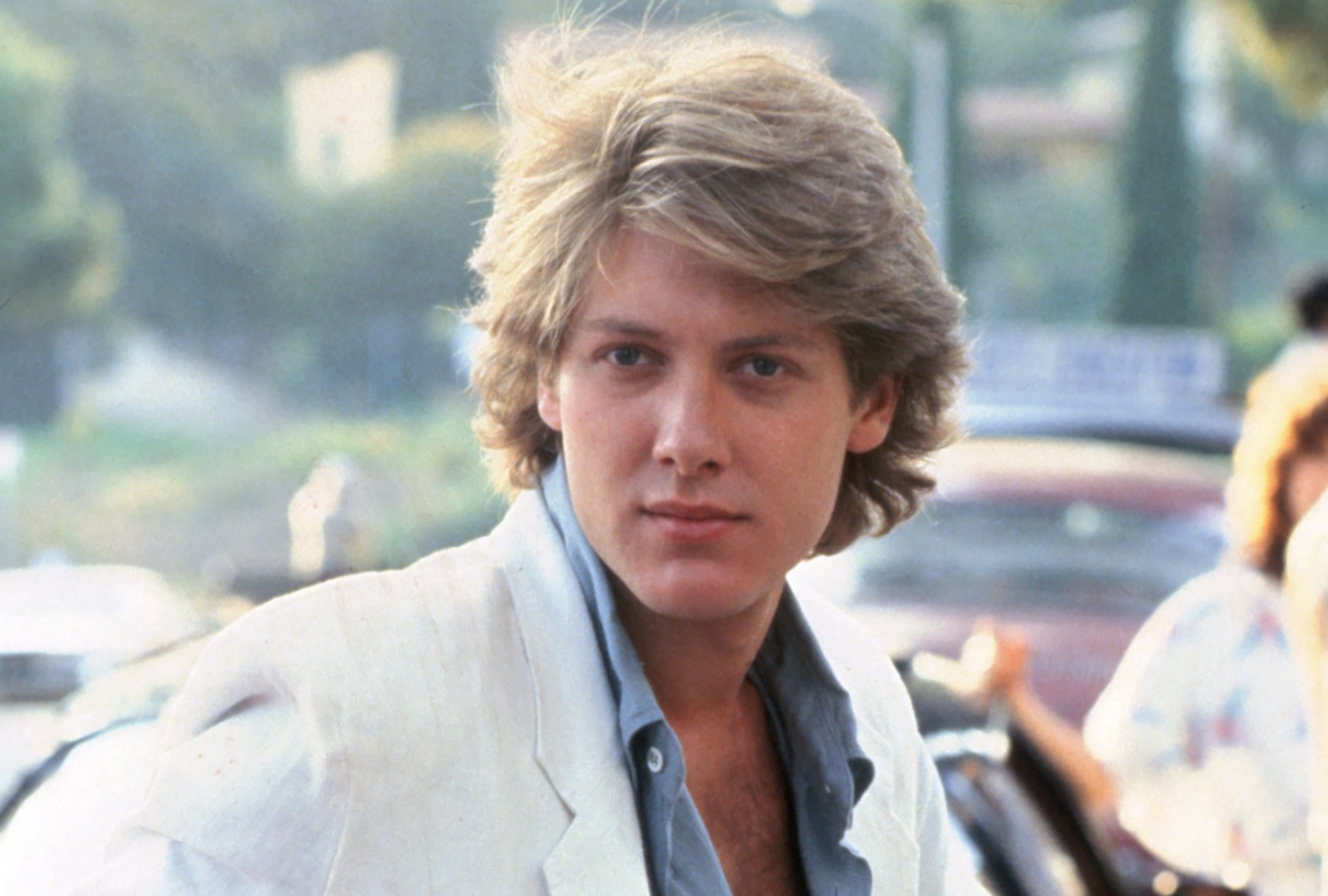
(Michael Ochs Archives/Getty Images) James Spader in “Pretty in Pink”
But “Pretty in Pink” fails to truly acknowledge that Andie operates at a much more consequential social disadvantage than her new boyfriend. Blane might have to brush off Duckie’s occasional curtness, but that’s the extent of his woes. Andie, however, must tolerate Steff and everyone else in Blane’s circle constantly telling her that she’s lesser than the rich kids she’s newly mingling with. She’s humiliated at parties and taunted in hallways. She has to care for her lush, out-of-work father while Blane enjoys the cushy comfort of financial stability. And despite witnessing all of this, Blane can’t bring himself to be honest with Andie when it all becomes too much for him, lying to her to save face and insulting her intelligence in the process.
Love makes us do crazy things, but watching both women deflate their shoulder pads and play the smiling girlfriend directly conflicts with the character arcs and emotional beats throughout the film, even if it’s how the story must inevitably be structured.
While Iona’s love interest isn’t quite so blunt, her transformation certainly is. When she begins dating the owner of a local pet shop, Iona immediately falls in step with her yuppie new beau. Hurt and in desperate need of her friend, Andie goes to see Iona to ask for her ruffly pink prom dress, a keepsake she promised Andie if ever she wanted it. But when she arrives at Iona’s apartment, Andie is shocked to see that a coiffed perm, light makeup, a sensible suit and a string of pearls have replaced her friend’s beehives and gelled spikes. “Either it’s all those drugs I took in the ’60s, or I am really in love,” Iona says, relenting that she looks like somebody’s mother. And, to Andie, she is.
Iona is the sweet, sage maternal figure Andie fiercely craves but won’t admit to wanting. But that doesn’t mean that she has to look matronly, either. Iona and Andie are such a perfect mother-daughter match because they have similar personality quirks and sartorial appetites, a genuine family resemblance. Neither of them needs to tone it down for the world to like them — something Hughes’ script conveys so plainly by how quickly the viewer falls for this dynamic duo. And yet, both Andie and Iona shirk their individuality for stability, leaving those singular, oh-so-charming elements of their characters in the dust when wealthy men come calling.
Granted, it wasn’t supposed to be this way. The film’s big ending — where Andie finds Blane alone and ashamed at prom and decides to take him back, culminating in their final kiss — wasn’t part of the final script. “Pretty in Pink” originally concluded with Andie and Duckie together, sharing a dance at the prom, which test audiences disliked so much that they booed the screen. Cryer claims the reaction made Hughes worried that viewers would perceive this finale as an encouragement not to cross class lines. Ringwald, on the other hand, felt it never made sense for Andie and Duckie to end up together in a film told like a Cinderella story. Months after the film’s initial production wrapped, a reshoot was scheduled for the new, crowd-pleasing ending.
While the new conclusion made some sense for Andie — a lovestruck teenager still trying to balance perspective with hormones — Iona altering her appearance so drastically for a man remains uncharacteristic. Love makes us do crazy things, but watching both women deflate their shoulder pads and play the smiling girlfriend directly conflicts with the character arcs and emotional beats throughout the film, even if it’s how the story must inevitably be structured. The final ending doesn’t make “Pretty in Pink” a poor film by any means, just a product of its time. Mainstream teenage romances of the ’80s were fashionable and predictable. Audiences wanted happy endings, and far more often than not, they got them. And even though these characters deserved far better than the screenplay their era would allow, it doesn’t mean their impact is for naught. When starry-eyed “Pretty in Pink” devotees think of Andie and Iona, we think of their looks, their personalities and their willingness to fight for themselves. (Alright, maybe their hair, too.) Those are the elements that have made these characters such iconic, powerhouse examples of individuality for 40 years and counting, and they’re the same ones that will keep “Pretty in Pink” an indelible part of culture forevermore.
Read more
analyses of John Hughes’ classics


