
Karen Gleason, a veteran reporter, lit a cigarette as she steps out of her white sports car into the sweltering dry heat of the South Texas summer. It took her a few minutes to reach the border wall then recently expanded by Gov. Greg Abbott to deter migrants from Central America. The wall, despite having gaps throughout, is daunting and monstrous. But it does not impede migrants, nor does it resolve the political divide of Del Rio, the city where Gleason lives.
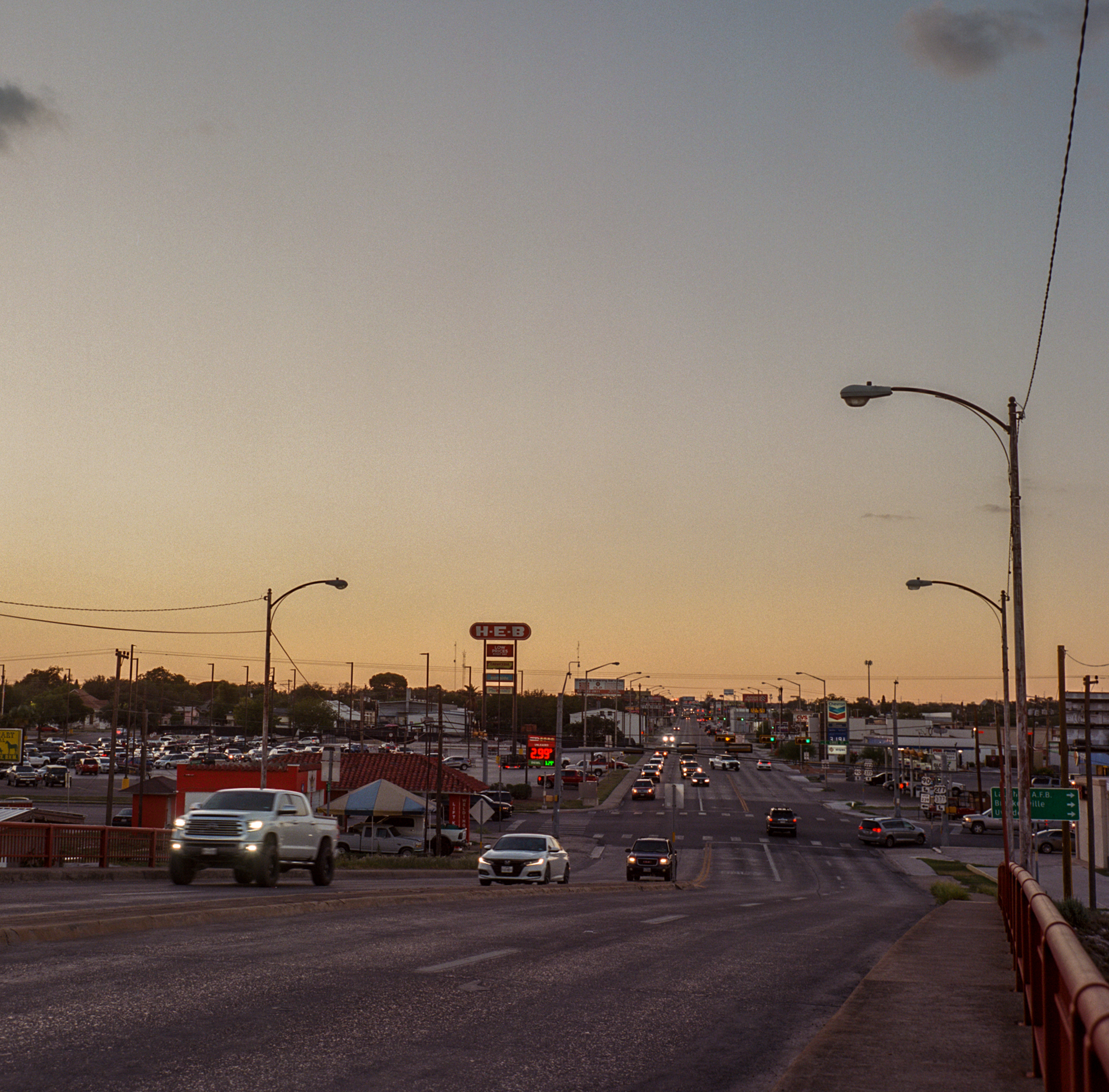
Del Rio sits on the banks of the Rio Grande River in Val Verde County in southwestern Texas. The small border city of 34,000 people has been at the center of the migrant crisis, most notably when thousands of Haitian migrants made headlines in September 2021 as they sheltered under a bridge outside of town.
This crisis was just one of several incidents during which residents of Del Rio and surrounding communities received a slew of misinformation and disinformation. The Del Rio News-Herald, a longstanding daily newspaper, closed in November 2020, making the city part of a growing trend of news deserts across the country.
With the paper closing, community members rely on other, sometimes unchecked, sources for information about immigration, crime, and politics, like the local radio station (which at times gets information from Fox News), right-wing individuals who stand in as citizen journalists with a growing Facebook platform, and social media accounts with anonymous contributors.
A popular Facebook account run by former Border Patrol agent Frank Lopez Jr. consistently associates immigrants with heightened crime in the area, often calling recent border crossers “terrorists, criminals, and rapists.” Lopez occasionally uploads videos of himself on location in front of migrants, telling his nearly 50,000 followers how tax dollars are being funneled to support them.
“This is one of the many misconceptions that has been magnified throughout different media,” says Tiffany Burrow, director of operations at Val Verde Border Humanitarian Coalition (VVBHC). “We don’t receive federal funding. So people say, ‘My taxes are paying for the work that you’re doing…’ We are a faith-based organization; there’s other ways to raise funding besides the federal government. [We receive] no federal funding.”

As a short-term respite center, the VVBHC is the first stop in the United States for migrants after being released by the Border Patrol. In 2023, VVBHC had 57,139 individuals walk through their door. During their brief stays at the center, migrants are offered small snacks, water, and hygiene kits. “Our mission is to help others in their time of need,” Burrow says. “If individuals are going to spew whatever they want without validating it, that’s a way bigger problem than one person is able to deal with.”
“Here, you have a lot of our elderly and a lot of people that don’t rely on their phone, so where do they get their news from? [They] don’t.” –Judge Lewis G. Owens
Another hot topic in Del Rio is crime—and the notion that it’s on the rise. For example, an anonymous Facebook account called Rio del Rio listens to the police scanner to post daily about incidents in the city. The posts often feature fear-mongering headlines, including one that claimed the Biden administration was letting ISIS-linked migrants into the country. “I don’t see myself as a journalist, more like a community activist trying to make their hometown better…having an impact on local government by bringing things to people’s attention is quite rewarding, as well,” the person behind the Rio del Rio account told me via Facebook messenger. The account holder believes maintaining anonymity is important “in order to post the things I post and get away with it.”
According to a study co-led by Northwestern University economist Elisa Jacome, there is no data to show that immigrants contribute to a higher crime rate. In fact, her study found that over a 150-year period, immigrants are far less likely to commit crimes than those born in the United States.



For a city like Del Rio, and other news deserts across the country, there is a lot at stake when it comes to this type of misinformation and disinformation. What we saw weeks before the 2024 presidential elections far surpassed anything we have seen before, according to disinformation researchers. As Americans tuned into one of the most closely followed elections in history, limited options for local news, advancements in Artificial Intelligence, and a lack of oversight on platforms like X left many voters vulnerable to falsehoods and smear campaigns. “If people don’t do their own fact-checking from serious, and from really solid resources…it’s going to be really hard to go forward,” Burrow says.
While traditional media–once the bedrock of how Americans stayed informed–continues to shift, legacy and start-up news outlets, with different business models and platforms, have new opportunities to enter the news industry.
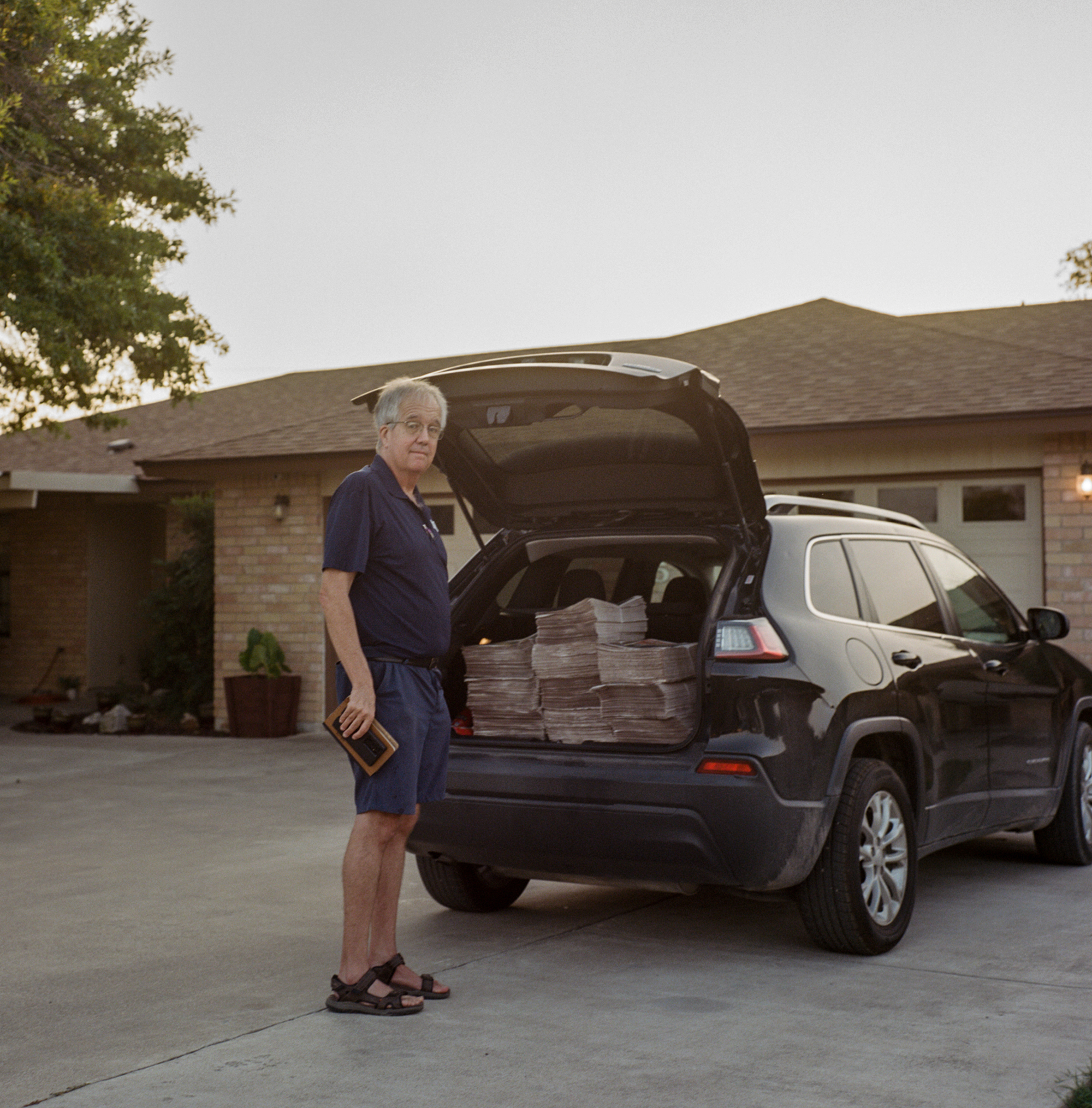
Gleason, who was a long-time employee of the Del Rio News-Herald, now works for a weekly tabloid-sized newspaper started by a veteran, Joel Langton. The newspaper operates out of Langton’s home. They meet in his living room, sip sparkling water and eat cookies while discussing the most important stories Gleason should dig into. Langton then personally delivers the newspaper every Friday morning to local establishments.
While Gleason makes a fraction of what she once made at the Del Rio News-Herald, since the 1980s, she has believed strongly in her mission as a journalist and keeping the people of Del Rio informed. Her role has not changed, and perhaps, has become even more vital.